Mixing up a stop-loss vs limit order cost me real money the first time I got it wrong — I thought I’d set a safety net under a position, checked back a few hours later, and found out my “safety net” had never actually triggered because I’d used the wrong order type entirely. They sound similar, they both involve setting a price, and beginners mix them up constantly. They do genuinely different jobs, and knowing which one to reach for matters more than most beginner guides make it sound.

Quick comparison
What a stop-loss order actually does
A stop-loss order sits quietly in the background until price hits a level you set, and once it triggers, it becomes a market order — meaning it sells (or buys, for a short position) at whatever the next available price happens to be. The entire point is limiting how much you can lose on a position without watching it every second. Say you buy a stock at $50 and set a stop-loss at $45; if the price drops to $45, your stop triggers and the position sells at the next available price, capping your loss in that trade to roughly 10%, give or take some slippage.
What a limit order actually does
A limit order is the opposite kind of promise: it guarantees your price, not your execution. A buy limit order at $45 will only fill at $45 or lower — never higher, no matter what. A sell limit order at $55 will only fill at $55 or higher. The tradeoff is that if price never reaches your limit, the order simply never fills. You get price certainty in exchange for giving up the certainty that the trade actually happens.

Where stop-loss orders can go wrong
The word “stop-loss” makes it sound bulletproof, and that’s the biggest misconception beginners carry into their first real trade. Once triggered, a standard stop-loss becomes a market order, and market orders fill at whatever price is currently available — not necessarily your stop price. In a fast-moving or gapping market (a stock opening sharply lower after bad overnight news, for example), your $45 stop might actually execute at $41 because price blew straight through your level before the order could fill at anything close to $45. This gap between your intended stop price and your actual fill price is called slippage, and it’s most severe during high volatility or low-liquidity conditions — exactly the moments a stop-loss matters most.
Stop-limit orders: a hybrid worth knowing
Understanding stop-loss vs limit order mechanics gets more nuanced with a stop-limit order, which combines both: once your stop price triggers, instead of becoming a market order, it becomes a limit order at a price you also specify. This protects you from the worst slippage scenarios, but introduces the limit order’s own risk back into the picture — in a genuinely fast-crashing stock, your stop-limit could trigger and then never actually fill if price blows straight past your limit price too. It’s a real tool worth knowing exists, but it doesn’t eliminate risk so much as trade one kind of risk for another.
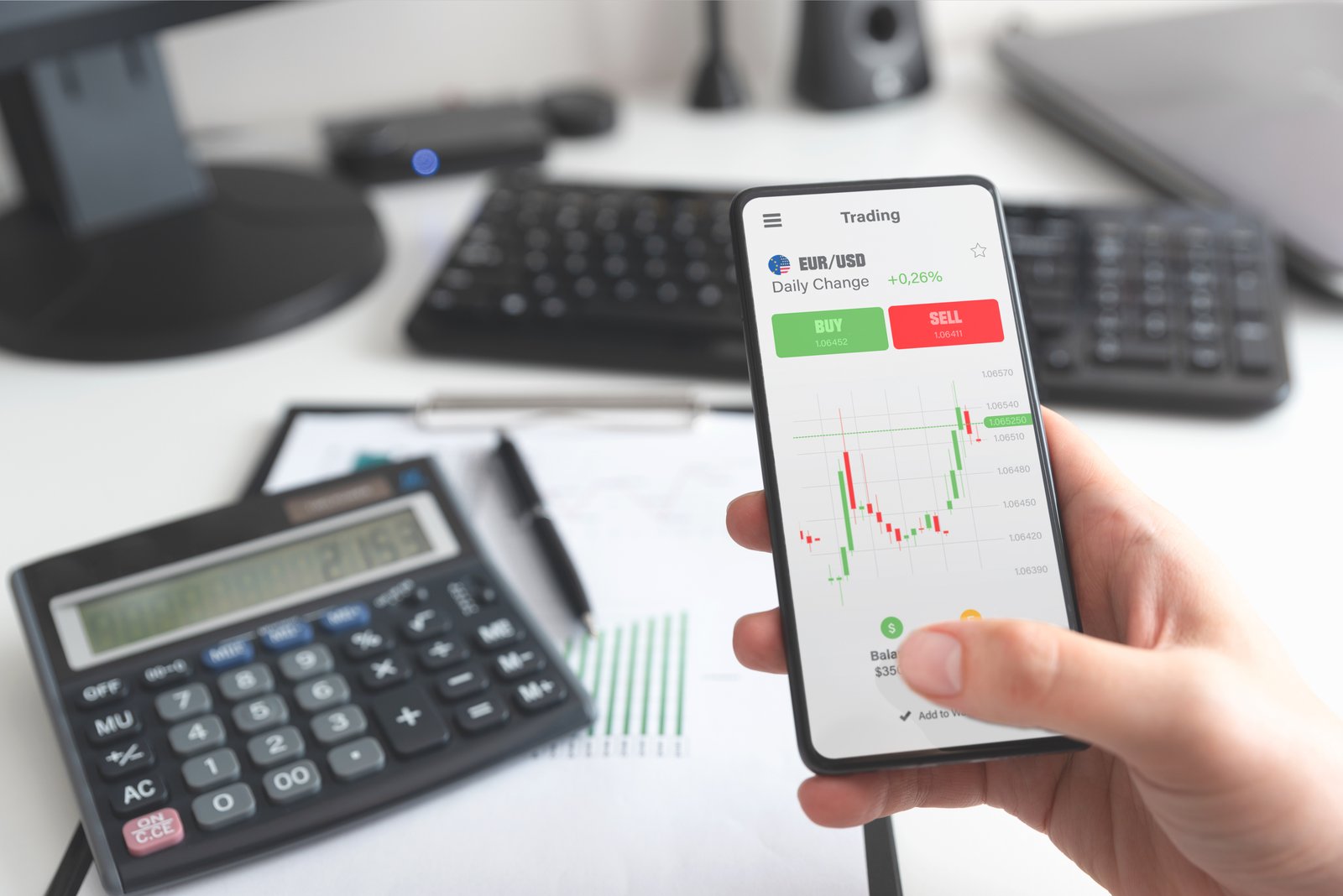
Stop-loss vs limit order: how to actually decide which one to use
When deciding between stop-loss vs limit order, use a stop-loss when the priority is limiting downside on a position you already hold and you’re willing to accept some slippage risk in exchange for the trade definitely closing out. Use a limit order when the priority is getting a specific price on an entry or exit and you’re fine walking away empty-handed if the market doesn’t cooperate. Most experienced traders end up using both together in normal practice: a limit order to enter a position at a price they’re comfortable with, and a stop-loss to define exactly how much they’re willing to lose if the trade goes against them from there.
One habit worth building early: decide your stop-loss level before you enter a trade, not after watching it move against you. Setting a stop in the moment, with a position already losing money, almost always leads to picking a level based on hope rather than a clear-headed read of where the trade actually stops making sense.

Common mistakes beginners make with both
In the stop-loss vs limit order debate, setting a stop-loss too tight is probably the single most common mistake — placing it so close to your entry price that normal, everyday price noise triggers it before the trade ever gets a real chance to work out. A stock can easily wiggle 1-2% in either direction during a completely unremarkable trading day, so a stop set just 1% below entry often gets triggered by nothing more than ordinary volatility, not any real change in the stock’s outlook.
On the limit order side, the common mistake is the opposite problem: setting a limit price so far from the current market price, hoping for a huge discount, that the order sits unfilled for weeks while the opportunity you were trying to catch passes by entirely. A limit order that never fills isn’t protecting you from anything — it’s just a trade that quietly never happened. If you find your limit orders routinely go unfilled, that’s usually a sign to set them closer to the current price, not further away.
How this connects to pre-market research
Deciding where to place a stop-loss works a lot better when it’s tied to an actual price level on the chart — a recent low, a support zone, a round number that’s acted as a floor before — rather than an arbitrary percentage. Our how to read a stock chart guide covers how to spot those support levels, and our pre-market research checklist walks through building that kind of plan before the market opens rather than reacting to price in real time. Platforms like TradingView let you draw those levels directly onto the chart, which makes translating “support around $45” into an actual stop-loss price a lot more precise than eyeballing it.
FAQ
Can I use a stop-loss and a limit order on the same trade?
Yes — it’s actually standard practice. A limit order to enter, then a stop-loss to define your exit if the trade goes against you, are commonly used together as two separate orders on the same position.
What’s a trailing stop, and is it different from a regular stop-loss?
A trailing stop automatically moves up as a stock’s price rises, maintaining a set distance (a dollar amount or percentage) below the current price, while a standard stop-loss stays fixed at whatever level you originally set. Trailing stops are useful for locking in gains on a winning position without having to manually adjust the stop yourself.
Do stop-loss orders cost extra to place?
No — nearly all major brokers let you place stop-loss, limit, and stop-limit orders at no additional cost beyond any standard commission the broker charges (many U.S. brokers now charge $0 commission on stock trades regardless of order type).
Some links on this page are affiliate links. If you sign up through one, we may earn a commission at no extra cost to you.