Quick Answer
The SEC has proposed giving U.S. public companies the option to file one new Form 10-S semiannual report plus one Form 10-K annual report instead of three Form 10-Q quarterly reports plus a Form 10-K. It is not a final rule. If adopted, the change could reduce mandatory interim reporting frequency for companies that elect the option, while material-event disclosures and other communications would still remain important.
For decades, U.S. investors have been trained to think in quarters. Earnings season arrives, companies report revenue and profit, management updates guidance, analysts revise estimates, and stocks react. That rhythm is so familiar that it can feel permanent.
But the Securities and Exchange Commission is considering a significant change. On May 5, 2026, the SEC proposed amendments that would allow public companies subject to Exchange Act reporting requirements to choose semiannual reporting instead of the current quarterly framework. The proposal would create a new Form 10-S for the first half of a company’s fiscal year.
The key word is optional. The proposal would not automatically force every company to stop filing quarterly reports. Companies could continue with the familiar 10-Q cadence if they believe quarterly reporting better serves their investors or business needs.
What the SEC Is Actually Proposing
Under the current U.S. framework, most reporting companies file three quarterly reports on Form 10-Q and one annual report on Form 10-K during a fiscal year. Under the SEC proposal, a company that elects semiannual reporting would instead file one Form 10-S after the first six months of the fiscal year and one Form 10-K after year-end.
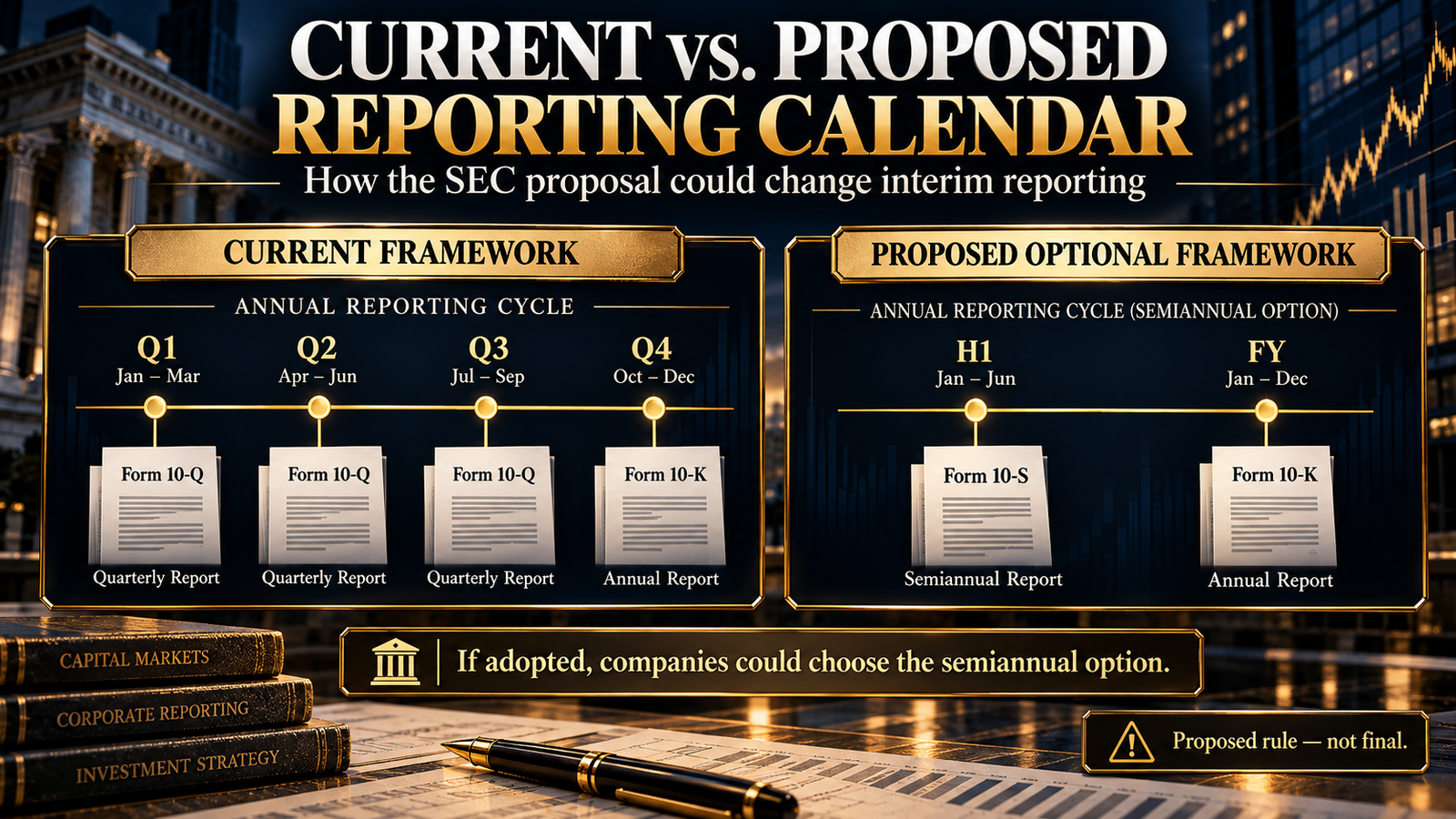
Important: as of September 2026, this remains an SEC proposed rule. Investors should not treat Form 10-S as the current mandatory reporting system.
Why Is the SEC Considering Semiannual Reporting?
The SEC’s stated rationale centers on flexibility. Chairman Paul Atkins said companies should have more room to determine the interim reporting frequency that best fits their business and investors. The agency has also tied the proposal to a broader effort to make public markets more attractive to companies and reduce unnecessary regulatory burden.
Preparing a Form 10-Q is not simply a matter of publishing a revenue number. Companies must prepare financial statements, management discussion and analysis, disclosures, internal reviews, legal work and audit-related procedures. Supporters of the proposal argue that reducing the number of mandatory periodic reports could save time and money and allow management to focus more heavily on longer-term operating decisions.
Critics focus on the other side of the equation: less frequent structured reporting could create longer periods in which investors have less standardized financial information available for quarter-to-quarter comparison.

Would Investors Really Get No Information for Six Months?
No. That is one of the biggest misconceptions surrounding the proposal.
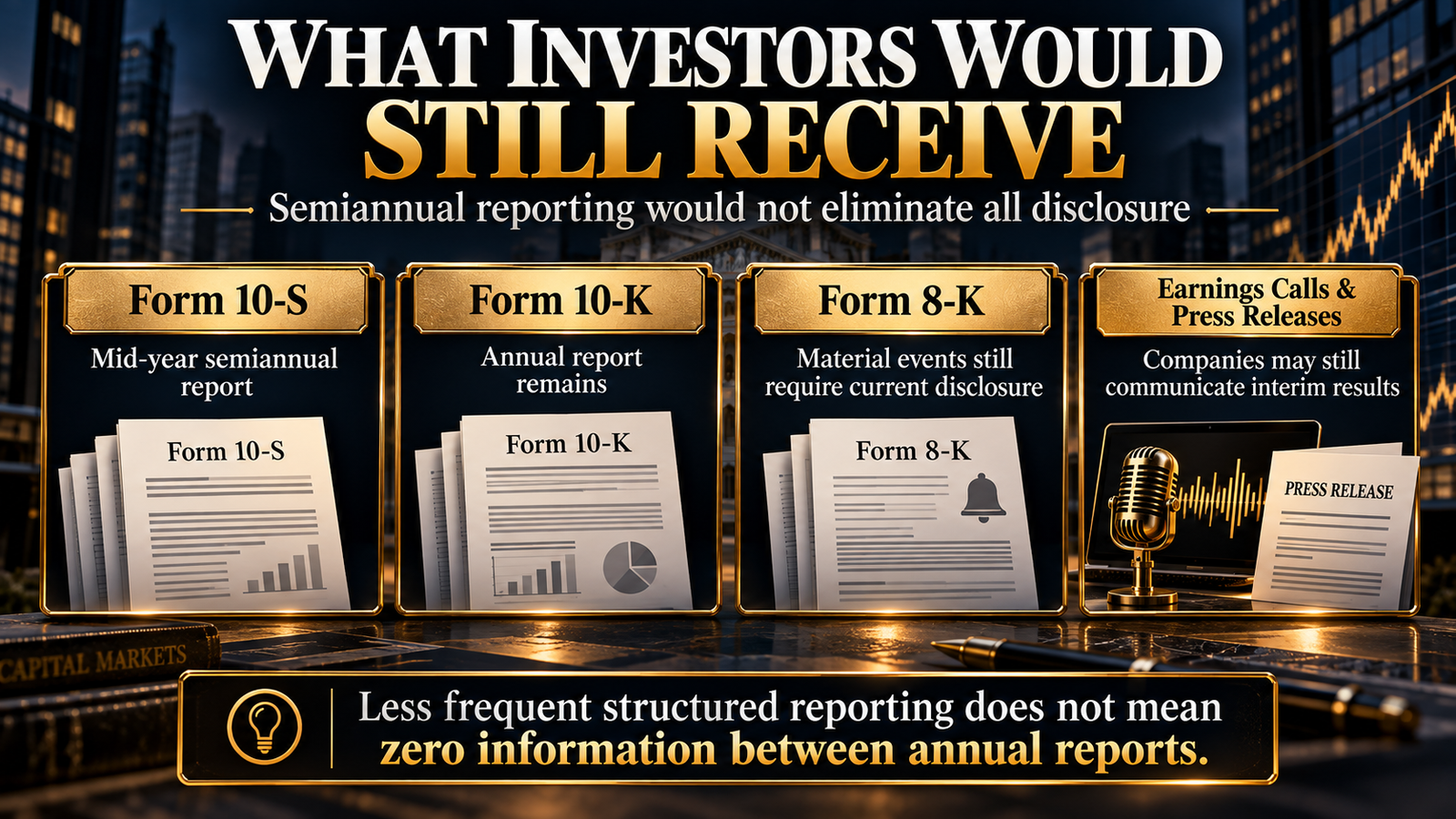
A shift from quarterly Form 10-Q reporting to optional semiannual Form 10-S reporting would not erase the broader disclosure system. Public companies would still have obligations to disclose material events under applicable securities rules, including through Form 8-K when required. Companies could also continue to communicate through earnings releases, investor presentations and earnings calls.
In fact, the SEC chairman specifically noted that companies considering their reporting cadence could weigh other avenues of disclosure, including earnings calls and current reports on Form 8-K. That means the practical investor experience could vary substantially from one company to another.
The Bigger Issue: Standardized Data vs. Voluntary Communication
This distinction matters. A press release is not the same thing as a standardized SEC periodic report. Earnings calls can be useful, but management chooses much of what to emphasize. Form 10-Q provides a more consistent framework for comparing companies and periods.
For retail investors, standardized disclosures help answer questions such as:
- Are margins improving or deteriorating?
- Is inventory building faster than sales?
- Is free cash flow keeping pace with reported earnings?
- Are receivables growing unusually quickly?
- Has debt changed materially?
- Did share count increase because of stock-based compensation or financing?
- Are risk disclosures changing?
If a company moves to semiannual reporting, investors may need to rely more heavily on management communications and event-driven disclosures between formal reporting dates. That does not automatically make the stock less investable, but it changes the information environment.
How Could Semiannual Reporting Affect Earnings Season?
If many companies adopted the option, earnings season could become less uniform. Some companies might continue reporting every quarter because their investors expect it. Others might provide only the required semiannual and annual periodic filings while issuing selected interim updates voluntarily.
That could make comparison harder. Imagine two competitors in the same industry. Company A continues filing quarterly 10-Qs. Company B elects Form 10-S and gives fewer standardized interim updates. Both may be complying fully with SEC rules, yet investors would have different levels of structured financial detail at the same point in time.
What Could Happen to Analyst Estimates and Price Targets?
Analysts build valuation models using revenue, margins, earnings, cash flow, balance-sheet trends and management guidance. Less frequent standardized reporting could make those models more dependent on alternative sources between filings: company guidance, industry data, channel checks, management commentary and macroeconomic assumptions.
That is important because price targets are only as good as the assumptions underneath them. If information becomes less frequent, uncertainty around those assumptions can increase. For a deeper explanation of how analysts revise their models, see our guide to price target changes and what investors should actually read.
Could Stock Volatility Increase Around Reporting Dates?
Possibly, but it is too early to state that as a certainty. With fewer mandatory periodic reports, more information could accumulate between formal reporting dates. When a semiannual report finally arrives, investors may have more new data to process at once.
On the other hand, active voluntary disclosure could reduce that effect. A company that continues giving detailed quarterly business updates might produce an investor experience that looks surprisingly similar to today’s environment even if it elects the new filing framework.
A Practical Checklist for Retail Investors
- Check the company’s chosen reporting cadence. Do not assume every company would use the same schedule.
- Watch Form 8-K filings. Material events can matter more than a routine calendar date.
- Read cash flow and balance-sheet data, not only earnings headlines.
- Track management guidance carefully. Guidance could become even more important between formal periodic reports.
- Compare disclosure quality with peers. Transparency itself can become a useful analytical factor.
- Separate a reporting change from a business change. Choosing a semiannual framework would not automatically mean a company is improving or deteriorating.
10-Q vs. Proposed 10-S: The Simple Difference
| Feature | Current 10-Q Framework | Proposed 10-S Option |
|---|---|---|
| Interim filing frequency | Three times per fiscal year | Once after the first six months |
| Annual filing | Form 10-K | Form 10-K |
| Mandatory for all eligible companies? | Current framework | No — proposed as an option |
| Current reports for material events | Form 8-K rules continue to apply | Would still remain relevant |
| Status in September 2026 | Current system | Proposal, not final rule |
Frequently Asked Questions
Is the SEC eliminating quarterly earnings reports?
No. The SEC has proposed an optional semiannual filing framework. The proposal has not become a final rule, and companies could retain quarterly reporting if the proposal were adopted.
What is Form 10-S?
Form 10-S is the new semiannual report proposed by the SEC. Under the proposal, an electing company would file it after the first semiannual period of its fiscal year instead of filing three Form 10-Qs during the year.
Would companies still file a 10-K?
Yes. The proposal keeps the annual Form 10-K. The major change concerns interim reporting frequency.
Would investors still receive material-event disclosures?
The proposal does not eliminate the broader current-reporting framework. Form 8-K and other disclosure obligations would remain important when specified material events occur.
Bottom Line
The SEC’s semiannual reporting proposal is not simply about having fewer earnings headlines. It raises a deeper question: how much standardized financial information should investors receive, and how often?
Supporters see flexibility, lower reporting burdens and a potentially friendlier environment for public companies. Critics worry about information gaps and reduced transparency. For retail investors, the most useful approach is not to take either side on faith. Instead, understand what information would change, what disclosures would remain and how the reporting cadence could affect the way you analyze guidance, valuation and risk.
Primary sources: SEC press release and SEC Proposed Rule S7-2026-15.
Educational purpose only. This article does not provide investment, legal or tax advice. Regulatory proposals can change before adoption, and investors should consult current SEC materials for the latest status.